
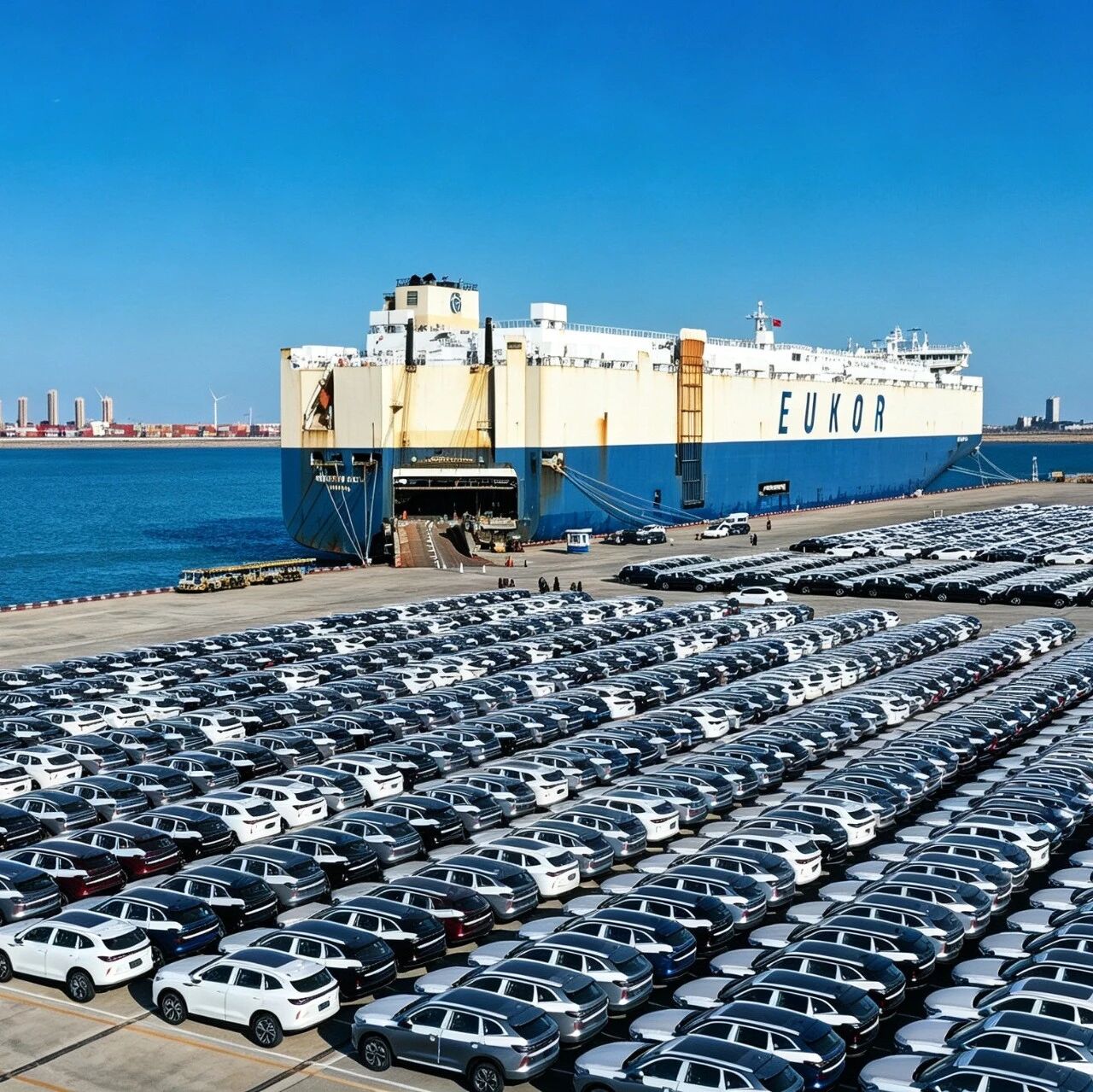
围绕中国制造业"产能过剩"的讨论持续升温,但商务部2026年7月发布的最新立场文件给出了清晰判断:出口多不等于产能过剩,中国制造的优势正从"价格优势"走向"系统优势"。对东盟而言,中国制造更多意味着"发展机会"而非"中国冲击"。中国企业出海东盟,需从"卖产品"升级为"共建产业",从"出口产品"升级为"本地服务",从"轻资产试水"升级为"本地化布局",从"单打独斗"升级为"平台协同"。马来西亚凭借区域位置、商业环境和产业基础,正成为中国企业进入东盟的重要支点。ARFF中国运营中心将持续提供市场信息、商协会对接、出海评估与产业落地支持。The debate around Chinese manufacturing "overcapacity" continues to heat up, but the latest position paper released by China's Ministry of Commerce (MOFCOM) in July 2026 delivers a clear message: high exports do not equate to overcapacity, and the strength of Chinese manufacturing is shifting from "price advantage" to "system capability". For ASEAN, Chinese manufacturing represents a "development opportunity" rather than a "China shock". Chinese enterprises going overseas should evolve from "selling products" to "co-building industries" — from exporting goods to delivering local services, from light-asset trials to localised presence, and from going alone to platform-based collaboration. With its geographic position, business environment and industrial base, Malaysia is becoming a key gateway for Chinese enterprises entering ASEAN. The ARFF China Representative Office will continue to provide market information, chamber and association matchmaking, overseas expansion assessment, and industrial landing support.
近一段时间,围绕中国制造业 "产能过剩" 的讨论不断升温。新能源汽车、锂电池、光伏、装备制造、智能终端、家电、机械设备等中国优势产业,频繁被部分国家贴上 "产能过剩" 标签,并由此引出关税、投资限制、市场壁垒和供应链重构等一系列问题。
For some time now, the debate surrounding "overcapacity" in Chinese manufacturing has been intensifying. Chinese industries with clear competitive advantages — new energy vehicles, lithium batteries, photovoltaics, equipment manufacturing, smart terminals, home appliances, and machinery — have frequently been labelled as suffering from "overcapacity" by certain countries, triggering a chain of issues including tariffs, investment restrictions, market barriers, and supply-chain restructuring.
2026 年 7 月,商务部正式发布《关于所谓 "产能过剩" 问题的中方立场》,系统阐明中国对全球产能、产业补贴、贸易顺差、市场竞争和全球产供链合作的看法。对普通读者而言,这是一份政策文件;对准备进入东盟市场的中国企业而言,这份文件传递出的信号非常直接:中国企业未来的国际化,不只是把产品卖出去,更要把技术、供应链、产业组织能力和本地合作能力带出去。
In July 2026, the Ministry of Commerce (MOFCOM) officially released its position paper titled "China's Position on the So-called 'Overcapacity' Issue", systematically outlining China's views on global capacity, industrial subsidies, trade surpluses, market competition, and global production and supply chain cooperation. For general readers, this is a policy document; for Chinese enterprises preparing to enter ASEAN markets, the message conveyed is highly direct — the future internationalisation of Chinese enterprises is no longer just about selling products overseas, but about taking technology, supply chains, industrial organisation capability, and local collaboration capability abroad.
一、先看清一个基本事实:全球产能本来就在持续流动
1. A Fundamental Fact: Global Production Capacity Has Always Been Mobile
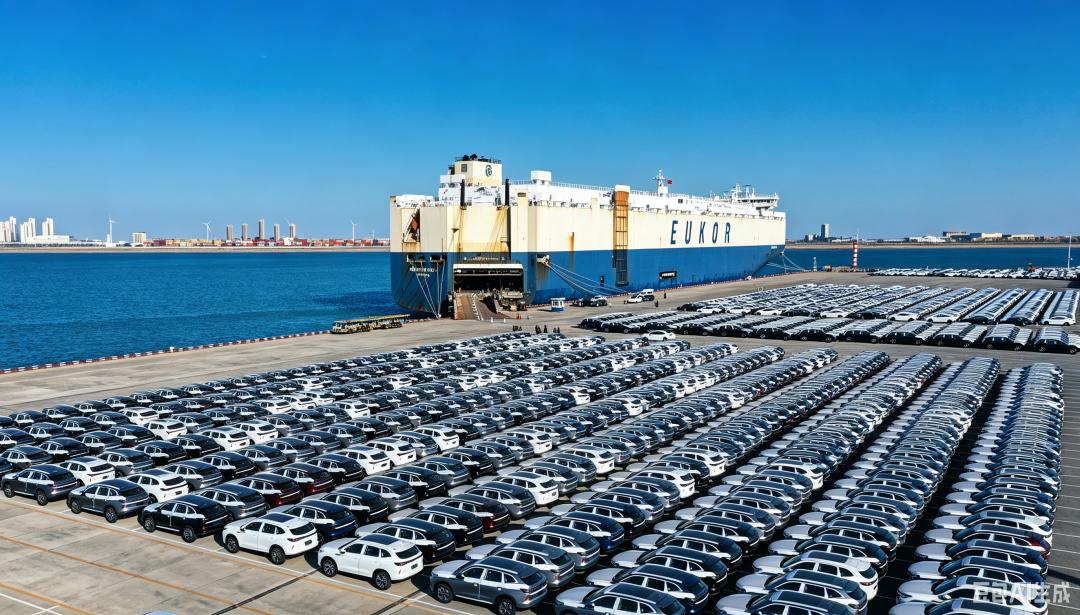
商务部文件指出,全球产能格局的变化,是国际产业分工和经济全球化长期演变的结果。从英国、美国、日本,到东亚和中国,全球制造业中心一直在变化。当前,中国部分产业继续向东南亚和其他地区延伸,也属于全球产业分工继续深化的自然过程。
The MOFCOM paper points out that changes in the global production capacity landscape are the result of long-term evolution in the international division of labour and economic globalisation. From Britain and the United States, to Japan, to East Asia and China, global manufacturing centres have continually shifted. The current extension of some Chinese industries into Southeast Asia and other regions is part of the natural process of deepening global industrial division of labour.
换句话说,产业不会永远固定在一个国家。 技术、资本、市场、劳动力、物流和消费需求变化,都会推动产业重新布局。对中国企业而言,这意味着:过去依靠国内市场和出口增长,未来需要更多考虑海外市场和本地化生产;过去强调单一产品竞争,未来更依赖供应链、服务、渠道和产业生态竞争。东盟正在成为全球产业重新配置中的重要区域,这也是为什么越来越多中国企业开始关注马来西亚、印尼、越南、泰国、新加坡等市场。
In other words, industries do not remain fixed in one country forever. Changes in technology, capital, markets, labour, logistics and consumer demand all drive industrial reconfiguration. For Chinese enterprises, this means a shift away from relying solely on domestic markets and export growth towards greater consideration of overseas markets and localised production, and a move away from competing on single products towards competing on supply chains, services, channels and industrial ecosystems. ASEAN is emerging as a critical region in the global industrial reconfiguration, which explains why a growing number of Chinese enterprises are turning their attention to Malaysia, Indonesia, Vietnam, Thailand, Singapore and other markets.
二、"出口多" 并不等于 "产能过剩"
2. High Exports Do Not Mean "Overcapacity"
文件明确指出:出口多、贸易顺差大,并不意味着产能过剩。 全球制造强国在发展过程中,都曾长期保持较高出口和贸易顺差。一个国家或企业出口增长,可能来自产品竞争力提升、技术进步、规模化生产、成本效率、全球市场真实需求,以及产业分工形成的比较优势。
The paper makes clear: high exports and large trade surpluses do not mean overcapacity. Throughout their development, all major global manufacturing powers have maintained relatively high levels of exports and trade surpluses for extended periods. A country's or enterprise's export growth may stem from improved product competitiveness, technological progress, scaled production, cost efficiency, genuine global market demand, and the comparative advantages formed through the international division of labour.
中国新能源汽车、光伏、锂电池、智能设备和机械装备走向全球,很大程度上源于全球绿色转型、数字化升级和工业化发展的真实需求。因此,中国企业面对国际市场时,不必因为 "产能过剩" 讨论而失去信心。 真正需要思考的,是如何把中国制造能力转化为当地市场真正需要的能力。
The global expansion of Chinese new energy vehicles, photovoltaics, lithium batteries, smart equipment and machinery largely reflects the genuine demand driven by global green transition, digital upgrading and industrialisation. Therefore, Chinese enterprises should not lose confidence in international markets because of the "overcapacity" debate. What truly deserves their attention is how to transform Chinese manufacturing capabilities into capabilities that local markets genuinely need.
三、中国制造的优势,正在从 "价格优势" 走向 "系统优势"
3. The Strength of Chinese Manufacturing Is Shifting from "Price Advantage" to "System Capability"
商务部文件多次强调,中国现代化产业发展的核心动力是创新和产业体系能力。中国企业的竞争力,已经越来越多来自技术研发、完整产业链、快速配套能力、数字化制造、绿色生产、大规模市场验证,以及从研发到量产的转化效率。文件提到,中国规模以上工业企业数字化改造比例持续提升,绿色工厂、绿色工业园区、灯塔工厂数量不断增加。
The MOFCOM paper repeatedly stresses that the core driving force behind China's modern industrial development is innovation and industrial system capability. The competitiveness of Chinese enterprises increasingly comes from technology R&D, complete industrial chains, rapid supporting capability, digital manufacturing, green production, large-scale market validation, and the efficiency of translating R&D into mass production. The paper notes that the proportion of industrial enterprises above designated size that have undergone digital transformation continues to rise, and the number of green factories, green industrial parks, and lighthouse factories is steadily increasing.
这说明,中国企业真正能够带给东盟的,不只是低成本产品,更重要的是: 工厂建设能力、数字化管理能力、供应链组织能力、设备和技术输出能力、标准化生产能力、产业园区运营能力、绿色低碳解决方案。这些能力,恰恰是许多东盟国家推动工业化和产业升级过程中所需要的。
This shows that what Chinese enterprises can genuinely bring to ASEAN is far more than low-cost products; more importantly, it includes factory construction capability, digital management capability, supply chain organisation capability, equipment and technology export capability, standardised production capability, industrial park operation capability, and green and low-carbon solutions. These capabilities are precisely what many ASEAN countries need as they pursue industrialisation and industrial upgrading.
四、对东盟而言,中国制造更多意味着 "发展机会"
4. For ASEAN, Chinese Manufacturing Represents More of a "Development Opportunity"
商务部文件提出,中国现代化产业发展带给世界的,不是所谓 "中国冲击 2.0",而是 "中国机遇 2.0"。这对东盟尤其具有现实意义。许多东盟国家仍处在工业化、城市化、消费升级和产业升级阶段,市场需要大量生产设备、新能源解决方案、农业机械、食品加工设备、数字化系统、冷链物流、建材和基础设施产品、智能终端、医疗和民生产品。
The MOFCOM paper proposes that what China's modern industrial development brings to the world is not the so-called "China Shock 2.0", but rather "China Opportunity 2.0". This carries particular practical significance for ASEAN. Many ASEAN countries are still in the stages of industrialisation, urbanisation, consumption upgrading and industrial upgrading, and their markets need substantial volumes of production equipment, new energy solutions, agricultural machinery, food processing equipment, digital systems, cold-chain logistics, building materials and infrastructure products, smart terminals, medical and livelihood products.
中国企业能够提供的,往往不仅是单个产品,还包括完整解决方案。
What Chinese enterprises can offer often extends beyond individual products to encompass complete solutions.
在农业领域,中国企业可以输出:智能养殖设备、农产品加工设备、农业数字化系统、冷链仓储、食品安全管理、供应链追溯能力。
In agriculture, Chinese enterprises can provide smart farming equipment, agricultural product processing equipment, agricultural digital systems, cold-chain warehousing, food safety management, and supply chain traceability capability.
在制造业领域,可以输出:自动化生产线、工业设备、节能环保技术、智能仓储、数字化工厂解决方案。
In manufacturing, they can deliver automated production lines, industrial equipment, energy-saving and environmental protection technologies, smart warehousing, and digital factory solutions.
在零售和服务领域,可以输出:连锁经营体系、数字会员系统、供应链管理、品牌运营、特许经营模式、跨境电商和物流服务。
In retail and services, they can contribute chain operation systems, digital membership systems, supply chain management, brand operations, franchise models, cross-border e-commerce and logistics services.
这类合作,不是简单把国内产能搬到海外,而是帮助当地形成产业能力、就业、税收、供应链和市场增长。
Such collaboration is not simply a matter of relocating domestic capacity overseas; rather, it helps the host country build industrial capability, employment, tax revenue, supply chains and market growth.

五、中国企业进入东盟,要从 "卖产品" 升级为 "共建产业"
5. Chinese Enterprises Entering ASEAN Should Evolve from "Selling Products" to "Co-building Industries"
过去,中国企业进入海外市场,很多时候主要依靠贸易。未来,单纯卖产品仍然重要,但已经不足以支撑长期竞争。真正可持续的模式,应逐步从以下几个方向升级。
In the past, Chinese enterprises entering overseas markets often relied primarily on trade. In the future, selling products alone will remain important, but it will no longer be enough to sustain long-term competitiveness. A truly sustainable model should gradually evolve in the following directions.
从出口产品,升级为本地服务。 企业不能只完成交货,还要考虑本地售后、技术支持、渠道建设、仓储配送、客户培训、品牌传播。
From exporting products to delivering local services. Enterprises should not stop at delivery; they must also consider local after-sales, technical support, channel development, warehousing and distribution, customer training, and brand communication.
从单个订单,升级为供应链合作。 企业要逐步建立稳定货源、本地仓储、订单系统、物流体系、结算安排、长期客户关系。
From individual orders to supply chain collaboration. Enterprises should gradually establish stable sources of supply, local warehousing, order systems, logistics systems, settlement arrangements, and long-term customer relationships.
从轻资产试水,升级为本地化布局。 具备条件的企业,可以逐步考虑本地公司、联合运营、组装加工、分装包装、海外仓、产业园区、区域总部。
From light-asset trials to localised presence. Enterprises with the right conditions should progressively consider local entities, joint operations, assembly and processing, packaging, overseas warehouses, industrial parks, and regional headquarters.
从单打独斗,升级为平台协同。 企业进入东盟,往往需要商协会平台、产业园区、本地合作伙伴、法律财税服务、准入和认证资源、物流和渠道资源。平台化进入,可以显著降低信息不对称和试错成本。
From going alone to platform-based collaboration. Enterprises entering ASEAN often need chamber and association platforms, industrial parks, local partners, legal and financial advisory services, market access and certification resources, logistics and channel resources. Entering through a platform can significantly reduce information asymmetry and trial-and-error costs.
六、为什么马来西亚值得重点关注?
6. Why Does Malaysia Deserve Particular Attention?
从区域位置、商业环境和产业基础来看,马来西亚可以成为中国企业进入东盟的重要支点之一。特别是在以下领域:清真食品、现代农业、冷链物流、零售连锁、特许经营、数字经济、绿色产业、产业园区、跨境贸易、区域供应链。马来西亚具备较好的区域连接能力,也可以帮助企业进一步辐射东盟及全球清真市场。
In terms of geographic position, business environment and industrial base, Malaysia can serve as an important gateway for Chinese enterprises entering ASEAN, particularly in the following areas: halal food, modern agriculture, cold-chain logistics, retail chains and franchising, digital economy, green industries, industrial parks, cross-border trade, and regional supply chains. With its strong regional connectivity, Malaysia can also help enterprises reach wider ASEAN markets and the global halal market.
对中国企业而言,马来西亚的价值不应只理解为一个终端市场。 它还可以成为市场测试平台、本地化服务平台、清真供应链节点、东盟区域分拨中心、产业合作入口、企业国际化运营基地。
For Chinese enterprises, Malaysia's value should not be understood merely as an end market. It can also function as a market-testing platform, a localised service platform, a halal supply chain node, an ASEAN regional distribution centre, an entry point for industrial cooperation, and a base for enterprise internationalisation.

七、企业出海东盟,最需要避免什么?
7. What Should Chinese Enterprises Most Avoid When Going to ASEAN?
商务部文件反复强调开放合作、市场规律、公平竞争和真实产业合作。对企业而言,这也意味着几个必须守住的底线。
The MOFCOM paper repeatedly emphasises openness and cooperation, market principles, fair competition, and genuine industrial collaboration. For enterprises, this also implies several bottom lines that must be upheld.
第一,不做虚假贸易。 跨境业务必须有真实产品、真实客户、真实物流和真实结算。
First, no fake trade. Cross-border operations must involve genuine products, genuine customers, genuine logistics, and genuine settlement.
第二,不做简单贴牌套利。 如果企业希望利用当地政策、原产地或税收安排,必须形成真实加工、真实增值和真实经营。
Second, no simple relabelling arbitrage. Enterprises that wish to benefit from local policies, origin rules or tax arrangements must establish genuine processing, genuine value addition, and genuine operations.
第三,不依赖单一关系。 关系可以帮助打开市场,但不能替代产品、合同、合规和交付能力。
Third, no reliance on a single relationship. Relationships can help open doors, but they cannot replace products, contracts, compliance and delivery capability.
第四,不把投资理解为买资产。 海外投资的核心,应是形成客户能力、供应链能力和市场能力。
Fourth, no understanding of investment as asset purchase. The essence of overseas investment should be building customer capability, supply chain capability and market capability.
第五,不追求短期热闹。 海外市场需要长期投入、持续服务和本地化经营。
Fifth, no chasing of short-term hype. Overseas markets require long-term commitment, sustained service, and localised operation.
八、ARFF 中国运营中心的现实价值
8. The Practical Value of the ARFF China Representative Office
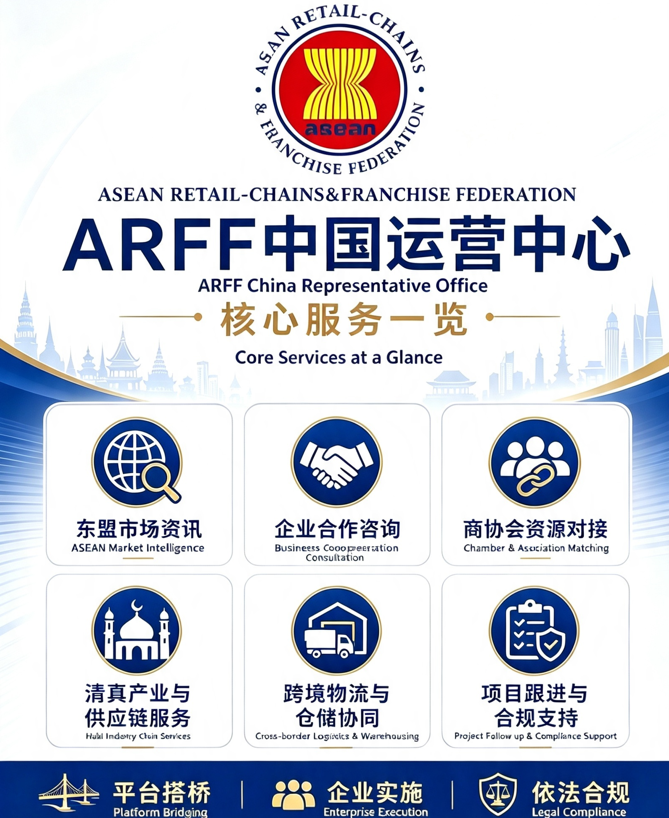
面对全球产业链重构,中国企业需要更多稳定、可信、持续的国际连接渠道。ARFF 中国运营中心将重点发挥以下作用:
Faced with the restructuring of global industrial chains, Chinese enterprises need more stable, reliable, and sustained international connectivity. The ARFF China Representative Office will focus on delivering the following value:
市场信息服务,帮助企业了解马来西亚及东盟的市场、行业、渠道和合作机会。
Market information services — helping enterprises understand the markets, industries, channels and cooperation opportunities in Malaysia and across ASEAN.
商协会和产业资源对接,连接东盟商协会、企业、渠道、园区和专业服务机构。
Chamber, association and industrial resource matchmaking — connecting ASEAN chambers of commerce, associations, enterprises, channels, industrial parks and professional service organisations.
企业出海基础评估,帮助企业梳理产品、市场、准入、供应链和本地化需求。
Overseas expansion baseline assessment — helping enterprises clarify their products, target markets, regulatory access, supply chain readiness and localisation needs.
项目合作协同,对有真实需求和推进基础的企业,协助进入后续沟通和资源匹配。
Project cooperation facilitation — for enterprises with genuine needs and a solid foundation, assisting with subsequent communications and resource matching.
产业落地支持,围绕仓储、物流、清真、园区、加工、渠道和本地服务,协调相关合作资源。
Industrial landing support — coordinating cooperation resources around warehousing, logistics, halal, industrial parks, processing, channels and local services.
ARFF 中国运营中心不会替企业承诺订单、审批、认证或投资结果。我们的价值,是帮助企业把机会看清楚,把路径理清楚,把风险讲清楚,把真正有价值的合作持续推进下去。
The ARFF China Representative Office does not promise enterprises orders, approvals, certifications or investment outcomes. Our value lies in helping enterprises see opportunities clearly, structure pathways clearly, communicate risks clearly, and steadily advance genuinely valuable cooperation.
结语
Closing
全球产业格局正在变化。有人看到的是 "产能过剩",有人看到的是产业竞争。对中国企业而言,更重要的,是看到新的市场、新的合作方式和新的发展空间。
The global industrial landscape is changing. Some see "overcapacity", others see industrial competition. For Chinese enterprises, what matters more is seeing new markets, new modes of cooperation, and new space for development.
东盟不是中国制造的简单出口市场,它可能成为中国企业新一轮国际化的重要合作区域。未来真正有竞争力的企业,既要保留中国制造的效率、技术和供应链优势,也要具备尊重当地市场、服务当地客户、创造当地价值的能力。 中国企业走向东盟,核心不是转移产能,而是共同创造新的产业价值。这正是中国企业国际化真正值得期待的地方。
ASEAN is not a simple export market for Chinese manufacturing; it can become an important region of cooperation for the next round of Chinese enterprise internationalisation. Future competitive enterprises must retain the efficiency, technology and supply chain strengths of Chinese manufacturing while developing the ability to respect local markets, serve local customers, and create local value. The core of Chinese enterprises going to ASEAN is not the relocation of capacity, but the joint creation of new industrial value. This is precisely what makes the internationalisation of Chinese enterprises genuinely worth looking forward to.
互动
Engagement
如果您的企业正在关注马来西亚及东盟市场,欢迎通过ARFF中国运营中心微信公众号提交:
If your enterprise is exploring Malaysia and ASEAN markets, please send us via the ARFF China Representative Office WeChat Official Account Admin Panel:
企业名称+主营业务+目标国家+一句话合作需求
Company name + main business + target country + a one-sentence description of your cooperation needs.
ARFF 中国运营中心将根据企业实际情况,安排后续沟通。
The ARFF China Representative Office will arrange follow-up communication based on the actual situation of each enterprise.
说明
Disclaimer
本文根据中华人民共和国商务部 2026 年 7 月发布的《关于所谓 "产能过剩" 问题的中方立场》整理,仅用于政策学习、产业观察和企业出海交流,不构成投资、贸易、法律或政策结果承诺。具体业务应根据目标国家政策、市场情况和企业实际依法合规推进。
This article is compiled based on the MOFCOM paper "China's Position on the So-called 'Overcapacity' Issue", released in July 2026. It is intended solely for policy study, industry observation, and exchange on enterprises going overseas, and does not constitute a commitment to investment, trade, legal or policy outcomes. Specific operations should be advanced in compliance with the laws and regulations of the target country, market conditions, and the actual situation of each enterprise.